
There is a scene in Challengers where Zendaya's character watches two men destroy each other on a tennis court because she has arranged for exactly that to happen. She does not swing a racket. She does not raise her voice. She sits in the stands with a face that gives away nothing, and the entire film bends around her stillness like light bending around a gravitational field. The critics called it "magnetic." The audience called it "terrifying." Neither word is wrong, but neither word explains what they were actually seeing.
What they were seeing was architecture. The same architecture that let a Disney Channel actress walk onto an HBO set and make the industry forget she had ever been on a children's network. The same architecture that turns a red carpet appearance into a cultural event without her doing anything more provocative than standing still in a dress. The same architecture that has made her, at twenty-nine, the only actress of her generation whose name alone changes a film's financial projections.
Her Saju chart shows what that architecture is made of — and why it operates the way it does.
The Four Pillars: Zendaya's Full Chart
Zendaya Maree Stoermer Coleman was born September 1, 1996. Her four pillars produce the following structure:
| Pillar | Heavenly Stem | Earthly Branch | Ten God | 12-Phase |
|---|---|---|---|---|
| Year (사회) | 丙 Yang Fire | 子 Rat | 정관 (Direct Authority) | 장생 (Birth) |
| Month (직업) | 丙 Yang Fire | 申 Monkey | 정관 (Direct Authority) | 제왕 (Peak) |
| Day (자아) | 辛 Yin Metal | 丑 Ox | — | 양 (Nurture) |
| Hour (내면) | 甲 Yang Wood | 午 Horse | 정재 (Direct Wealth) | 병 (Illness) |
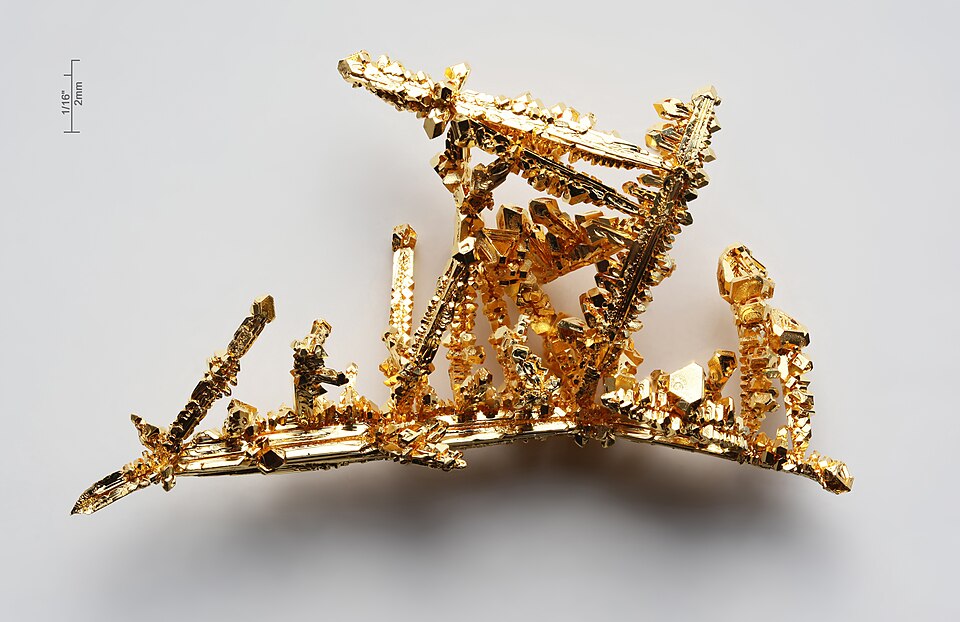
Day Master: 辛 (Sin) — Yin Metal. The jewel. The blade's edge. The silver needle. Not the iron beam that holds up buildings — the precise, refined, cold-surfaced metal that reveals its value only under specific conditions. Yin Metal is the element that needs cutting and polishing to become what it is supposed to be. In its raw state, 辛 sits inside earth and rock, invisible to anyone not willing to dig.
Day Pillar's 12-Phase Energy: 양 (Yang, Nurture) — the phase of gestation, of something still forming inside a shell. This is not weakness. This is potential that has not yet fully surfaced. A jewel in the Nurture phase is still underground. It exists. Its structure is already complete at the molecular level. But the world has not seen it yet — or has only seen the first gleam breaking through the soil.
That is Zendaya at twenty-nine. Still emerging. Still revealing new facets. The trajectory from Shake It Up to Dune: Part Two is not a reinvention. It is an excavation.
The Structure: 양인격 (Blade Structure) — The Paradox at the Center
This is where the chart becomes genuinely unusual.
Zendaya's chart structure, determined by the dominant energy configuration, is classified as 양인격 (Yang-in-gyeok) — Blade Structure. Classical Saju texts associate this framework with commanders, executioners, and people whose decisional capacity operates with surgical finality. Blade Structure charts produce individuals who do not deliberate. They assess, decide, and execute — and the decision arrives with an authority that makes other people rearrange their plans.
But here is the paradox. Her chart strength scores at -1.6 — which means her Day Master is weak. A Blade Structure is the formation of overwhelming personal force. A weak Day Master is a self that lacks structural reinforcement. Having both at the same time is like owning a sword you are not quite strong enough to lift.
This is rare. And it is revealing.
A Blade Structure with a strong Day Master produces people who dominate rooms through sheer force of presence — generals, CEOs, the person at the dinner table whose opinion ends every argument. A Blade Structure with a weak Day Master produces something different and, in many ways, more dangerous: someone whose decisional sharpness exceeds their visible power. The blade is real. The arm holding it looks like it should not be strong enough. People underestimate the cut until it has already landed.
Zendaya's entire career is built on this structural paradox. She does not project force. She projects stillness, poise, a surface so composed that interviewers routinely describe her as "mature beyond her years" or "effortlessly elegant." That composure is not effortless. It is a weak Day Master managing Blade Structure energy with extraordinary precision — keeping the edge sheathed until the exact moment it is needed.
The Challengers performance is the clearest example. A role that required her to control every scene without raising her voice, without physical dominance, without any of the conventional markers of power. The Blade Structure provided the decisional edge. The weak Day Master forced that edge into subtlety. The result was a performance that felt like watching someone win a fight without ever making a fist.
Elemental Balance: Fire Everywhere, and It Is Not Friendly
| Element | Presence | Distribution |
|---|---|---|
| Wood 木 | 甲 | 12.5% |
| Fire 火 | 丙丙 + 午(丁丙) | 37.5% |
| Earth 土 | 丑(己) | 12.5% |
| Metal 金 | 辛 + 申(庚) | 25.0% |
| Water 水 | 子(癸) | 12.5% |
Fire at 37.5%. More than a third of Zendaya's elemental composition is Fire — and Fire is the element that attacks Metal. In the controlling cycle, Fire melts Metal. It is the force that reshapes, pressures, and transforms the Day Master against its will. Fire in Zendaya's chart is not warmth. It is the forge.
The specific Fire elements are both 丙 (Yang Fire) — the blazing sun, the furnace, the inescapable heat. And both carry the designation of 정관 (Direct Authority) — legitimate power, institutional pressure, the boss, the system, the framework of expectation that bears down on the self. She has three Authority stars total in her Ten God distribution. Three separate structural sources of external control pressing on a Day Master scored at -1.6.
Her 용신 (yongshin) — the elements her chart most needs — are Metal (비겁, Companion energy) and Earth (인성, Resource/Seal energy). The chart is Fire-dominated and Metal-starved, so it needs more of itself (Metal reinforcement) and the element that produces Metal (Earth nurturing). She thrives in periods when Earth and Metal energy cycle into her luck, when the environment provides structural support rather than structural demand.
Her 기신 (gishin) — the elements that damage her chart — are Fire (관성, Authority) and Wood (재성, Wealth). The very element that dominates her chart is the one she should have least of. The element she is supposed to control (Wood as Wealth) also drains what little Metal strength she has.
This is the elemental math of someone who performs best under conditions that simultaneously threaten to destroy her. Fire pressure is constant. The chart cannot escape it — Authority sits in both the Year and Month pillars, occupying the positions that govern public life and career. Every professional environment Zendaya enters is structurally a furnace. Disney was a furnace. Hollywood is a furnace. The fashion industry is a furnace. The chart does not get to choose a cooler room. It must learn to hold its shape at temperatures that should, by the numbers, melt it.
She has not melted. The -1.6 is surviving the 37.5%. That survival is the career.
辛丙 천간합 ×2: The Double Bond to Authority
This is the most structurally distinctive feature in Zendaya's chart, and it explains more about her life than any other single element.
The Day Stem 辛 (Yin Metal) and the Month Stem 丙 (Yang Fire) form a 천간합 (Heavenly Stem Combination) — 辛丙합. The same 辛 also forms a second 辛丙합 with the Year Stem 丙. Two Heavenly Stem combinations, both between the Day Master and Authority (정관) energy.
In a woman's chart, 관성 represents the partner — the person who exercises the most structural influence over the self. When the Day Master forms a direct combination with Authority energy, it means the self and the partner's energy are not merely interacting. They are merging. The boundary between self and Authority dissolves. The person does not simply experience external pressure — she bonds with it, absorbs it, makes it part of her identity.
Two of these combinations means the bonding is doubled. Authority energy is not an external force Zendaya manages. It is woven into her identity at two structural points — the Month Pillar (career, public life) and the Year Pillar (society, inherited environment). She is fused to institutional power in both her professional domain and her broader social context.
This structural feature maps onto her career with uncomfortable precision. Zendaya did not rebel against Disney. She did not stage a public breakup with the child-star machine the way many of her contemporaries did. She absorbed what the institution had to teach, let it shape her public skills, and then carried that institutional polish into prestige spaces where it became a competitive advantage. The Disney composure became the Euphoria composure became the Dune composure. She did not shed the Authority. She merged with it and took it with her.
The same 辛丙합 operates in her personal life. Tom Holland — Spider-Man, the face of the Marvel Cinematic Universe, one of the most publicly recognized actors on the planet — represents Authority energy in human form. Not authority as control, but authority as institutional visibility, public pressure, the weight of being watched by millions of people. The double 辛丙합 did not predict a specific person. It predicted that Zendaya's partner would be someone whose presence compounds the Authority pressure already saturating her chart — and that she would bond with that pressure rather than resist it. The couple's famous privacy, their refusal to perform their relationship for public consumption, is a structural survival strategy. Two 辛丙합 bonds already channel enough Authority energy. Adding voluntary public exposure would exceed what a -1.6 Day Master can process.
Six Interactions: The Chart That Never Rests
Zendaya's four pillars contain six major interactions — an unusually high count that means every pillar is structurally connected to or in tension with at least one other pillar. Most charts have two to four. Six means the internal architecture is in constant motion, every element pulling on or feeding into something else.
丑子 육합 (Day-Year Six Harmony) — The Ox and the Rat merge. The self (Day Branch) harmonizes with the social environment (Year Branch). This is why Zendaya navigates public spaces with apparent ease despite the intense pressure her chart carries. The Day and Year branches are cooperating, not fighting.
子申 반합 (Year-Month Half Combination) — The Rat and the Monkey form a partial Water combination. Water is the element that gives birth to Metal in the productive cycle. This half-combination in the career and social pillars provides a trickle of nourishing energy in her public life — just enough to keep the Day Master fed while the Fire bears down.
午子 충 (Hour-Year Clash) — The Horse and the Rat collide. The inner world (Hour) crashes against the social sphere (Year). This is the tension between what Zendaya wants privately and what the public demands. The famous composure, the controlled interviews, the minimal social media presence relative to her fame level — all of this is a person managing the structural collision between an inner world that wants privacy and an outer world that will not grant it.
午丑 해 (Hour-Day Harm) — The Horse harms the Ox. The inner drive damages the self. This is the structural cost of ambition in a chart this pressurized. The inner world does not merely clash with the outer world — it also erodes the Day Pillar's stability. Achievement in this chart comes with a structural toll. The composure is maintained, but it requires energy that the chart does not have in surplus.
The combined effect of six interactions is a person whose internal experience is radically more complex than her external presentation suggests. Zendaya's public image is stillness, control, selective engagement. The chart underneath is a system where every element is pulling on every other element simultaneously, where harmony and collision coexist in the same structure, where the self is bonded to Authority twice, clashing with its own inner world, and being slowly eroded by the very ambition that drives it forward.
The composure is not personality. It is engineering.
The 신살: Nine Spirit Markers
Zendaya's chart carries nine 신살 (spirit markers) — well above the typical three to five. A chart with nine markers is structurally destined for a life that generates unusual intensity, complexity, and public significance.
천을귀인 (Heavenly Noble) — The most auspicious spirit marker in Saju. It attracts benefactors, protectors, people who arrive at critical junctures to open doors. Zendaya's career is punctuated by these figures. The casting director who saw something in a Disney audition. Sam Levinson offering Euphoria's lead to someone the industry still considered a children's entertainer. Denis Villeneuve casting her in Dune when her film resume was thin. The Heavenly Noble does not guarantee success. It guarantees that doors will appear — and appear at the moments when walking through them changes everything.
문창귀인 (Literary Star) — Intellectual refinement, the marker of someone whose creative output rewards analysis beyond the surface. Zendaya chooses roles that operate on multiple levels — Rue's addiction in Euphoria as a commentary on an entire generation's relationship to numbness, Chani in Dune as both love interest and political agent, Tashi in Challengers as a study in how ambition metabolizes love.
학당귀인 (Academy Noble) — The perpetual student. The person who approaches every new domain as a discipline to be mastered. Zendaya moves between acting, fashion, and production not as a celebrity branching out but as someone systematically acquiring competencies. The Academy Noble is why each transition looks deliberate rather than scattered.
태극귀인 (Grand Ultimate Noble) — Spiritual and philosophical depth. This marker appears in people whose public presence carries weight beyond the immediately visible. The quality interviewers describe as Zendaya being "an old soul" is not personality. It is structural.
도화살 (Peach Blossom) — Interpersonal magnetism, the marker that makes a room reorganize itself around the person's presence. In a performer's chart, Peach Blossom is the structural basis for screen presence — the quality that makes a camera want to stay on someone's face longer than the scene requires. Zendaya's Peach Blossom operates through restraint rather than display, which is more effective and harder to replicate.
화개살 (Flower Canopy) — Artistic sensitivity, the mark of someone whose internal experience is richer than their external expression. Flower Canopy people collect impressions the way other people collect objects. The fashion choices — each appearance a considered artistic statement rather than a commercial transaction — carry this energy.
현침살 (Mystic Needle) — Precision. The ability to locate the exact point of impact. In acting, this manifests as the capacity to find the single gesture, the single look, the single line reading that carries the entire emotional weight of a scene. The Euphoria bathroom scene in the pilot episode. One take. One face. A career launched from a single moment of Mystic Needle accuracy.
황은대사 (Yellow Silver Envoy) — A marker of cross-cultural bridge building, of moving between worlds and making the passage look seamless. Zendaya's biracial identity, her movement between genres and industries, her ability to occupy spaces from Disney Channel to Luca Guadagnino's cinema without either context rejecting her — this is the structural marker for all of it.
암록 (Hidden Wealth) — Wealth that arrives through invisible channels, resources that accumulate quietly rather than spectacularly. Zendaya's financial trajectory has been characterized by this quality — a steady, compounding accumulation rather than a single explosive event.
The Luck Cycles: When the Architecture Shifts
Zendaya's 대운 (major luck cycles) map onto her career transitions with the precision that makes a practitioner set down the chart and look twice.
2004–2013 (Ages 8–17): 乙未 — Indirect Wealth + Indirect Seal
The Disney Years. 乙 (Yin Wood) is 편재 (Indirect Wealth) — unconventional paths to material success. 未 (Goat) carries Earth, which is 인성 (Seal/Resource energy) for a Metal Day Master. Wealth through unusual channels, supported by institutional nurturing.
A child actress booking a Disney Channel series at fourteen is Indirect Wealth operating exactly as described. Not the conventional path to prestige. Not the route anyone would design on purpose. But the chart did not need it to be prestigious. It needed it to be productive, and the Seal energy from the Goat Branch ensured that the institutional environment — Disney's machine — would feed the developing Day Master rather than crush it.
This cycle also carried Wood energy as Wealth. For a Metal Day Master, Wood is what Metal cuts and shapes. The Disney years were Zendaya shaping raw material into something usable — learning camera technique, public composure, the mechanics of being watched by millions of people while maintaining the internal structure of a Yin Metal person who is still in the Nurture phase. The skill set was the wealth. Not the paycheck.
2014–2023 (Ages 18–27): 甲午 — Direct Wealth + Seven Killings
The Breakthrough Decade. 甲 (Yang Wood) is 정재 (Direct Wealth) — structured, legitimate material accumulation. 午 (Horse) carries Fire as 편관 (Seven Killings) — the aggressive, unconventional, pressure-cooker form of Authority.
Wealth energy with Seven Killings underneath. The chart says: you will accumulate, and the accumulation will happen under conditions of extreme pressure. This is the decade of Euphoria (2019), Spider-Man: Homecoming (2017) through No Way Home (2021), the first Dune (2021), and the fashion evolution that turned Met Gala appearances into career-defining moments. Every achievement arrived inside a pressure chamber. The transition from Disney to HBO — Seven Killings pressure. The scrutiny of dating Tom Holland publicly — Seven Killings pressure. The expectation that she prove herself in every new genre — Seven Killings pressure.
The 午 (Horse) in the luck cycle also activates the 午子 충 (Horse-Rat clash) with her Year Branch. The decade that made her famous was also the decade that most intensely activated the collision between her inner world and her public sphere. The privacy she guards with unusual ferocity for someone at her fame level is not preference formed during this decade. It is a structural response to a luck cycle that amplified the clash already built into her natal chart.
2024–2033 (Ages 28–37): 癸巳 — Output + Direct Authority (Current Cycle)
The Current Architecture. 癸 (Yin Water) is 식신 (Eating God) — creative expression, refined output, the channeling of internal experience into external form. 巳 (Snake) carries Fire as 정관 (Direct Authority) — legitimate institutional power.
This is a fundamentally different elemental weather than the previous decade. The Seven Killings pressure has been replaced by Direct Authority — still demanding, but structured and legitimate rather than chaotic and combative. And for the first time, the Heavenly Stem carries Output energy rather than Wealth energy. The chart is shifting from accumulation under pressure to expression within structure.
Challengers (2024) is the first major product of this cycle, and it is structurally revealing. A Luca Guadagnino film — art cinema with commercial reach, institutional prestige with popular accessibility. Direct Authority. And her performance in it — controlled, precise, expressive without being demonstrative — is Eating God energy channeled through a Blade Structure. Output with a cutting edge.
The 癸 (Yin Water) in the Heavenly Stem is also significant because Water produces Metal in the productive cycle. For the first time in over a decade, the luck cycle is feeding her Day Master rather than pressuring it. The -1.6 strength score does not change, but the environmental support does. This is the structural reason the current phase of Zendaya's career feels qualitatively different — less survival, more command. The furnace temperature has not dropped, but the Metal being forged inside it is receiving reinforcement it did not have before.
Dune: Part Two (2024), the expanded role in the Villeneuve universe, the production company ambitions, the continued evolution of the fashion presence into something closer to artistic practice — all of this maps onto a cycle where Output and Authority cooperate rather than Output struggling against Authority. The next seven years of this cycle are structurally positioned for the work that defines the career rather than the work that builds it.
The Blade Structure Paradox: A Note on Structural Twins
One of the more striking features of Zendaya's chart is that her core structural paradox — Blade Structure combined with a weak Day Master — mirrors a pattern found in other charts built for high-pressure creative industries.
IU's chart, for comparison, also carries 양인격 (Blade Structure) — but with a different Day Master element and a different relationship to the blade. In IU's case, the Blade operates through a Yin Fire Day Master whose gentleness masks the cutting edge. In Zendaya's case, the blade operates through Yin Metal, where the cutting edge is the surface, but the arm holding it is weaker than it appears.
The shared structure produces a shared outcome: both women dominate their respective industries through precision rather than force, through selection rather than volume, through the strategic deployment of an intensity that their public presentation would never lead you to expect. Blade Structure does not require brute strength. It requires knowing exactly where to cut.
The -1.6 weakness score adds another layer. A Blade Structure at full strength is a straightforward reading — overwhelming personal force, visible dominance, the person in the room whose energy fills every corner. A Blade Structure at -1.6 is a different instrument entirely. The blade is sharp, but the wielder must choose each stroke carefully because there is no surplus energy for wasted motion. Every role Zendaya selects, every public appearance she makes, every interview she gives carries the efficiency of someone who cannot afford to swing the blade carelessly. The selectivity that the industry interprets as "mysterious" or "calculating" is a weak Day Master managing Blade Structure resources with the precision the chart demands.
What This Reading Shows — And What a Full Reading Contains
A celebrity chart analysis works with public birth data and maps structural patterns onto documented events. It demonstrates what Saju reveals about architecture — the deep structure underneath a life that talent, timing, and luck alone cannot explain.
A full personal reading goes deeper. It maps your specific chart against the decisions you are weighing right now — the career transition you are considering, the relationship dynamic you are trying to understand, the question of whether this year is the year to move or the year to wait. It identifies your 용신, the element your chart most needs, and shows you where to find it in concrete, practical terms. It reads your current 대운 and annual energy to answer the question that sits beneath every other question: what is my structure built for, and when does the timing align?
Zendaya's chart explains how a Blade Structure at -1.6 became the most commanding screen presence of her generation. Your chart can explain what your own architecture is built to do — and when the environment is ready for you to do it.
You Might Wonder
Is Zendaya really a Yin Metal Day Master?
Yes. Using her publicly confirmed birth date of September 1, 1996, the standard Saju calculation produces a Day Stem of 辛 (Sin) — Yin Metal. This is mathematical, not interpretive. Any practitioner calculating from the same date will arrive at the same result.
What makes her chart Blade Structure specifically?
The Blade Structure forms when the Day Master's energy reaches a specific critical configuration in relation to the Month Pillar. For Zendaya's 辛 Metal, the Month Branch 申 (Monkey) sits at the Peak position (제왕), creating the concentrated energy pattern that classical texts identify as 양인격. The blade is not a metaphor — it describes the quality of decisional energy the chart produces.
How can someone have a Blade Structure and still be weak?
This is the paradox that makes the chart interesting. Chart strength (-1.6) measures the overall support the Day Master receives from surrounding elements. Structure type (Blade) measures the pattern of energy organization. A weak Day Master in a Blade Structure means the person has access to extraordinary decisional sharpness but must deploy it selectively. The weakness forces precision. The precision becomes the competitive advantage.
What does the double 辛丙合 mean for her relationship?
The two Heavenly Stem combinations between her Day Master (辛) and the Authority stems (丙丙) mean that Authority energy — which in a woman's chart structurally represents the partner — is fused to her identity at two points. This does not predict a specific relationship outcome. It predicts that her partner will carry significant institutional or public authority, and that the relationship will be characterized by deep structural bonding rather than surface-level connection. The privacy she and Tom Holland maintain is consistent with this reading — the bond is structural and does not require public performance to sustain itself.
Can my chart have the same structure as Zendaya's?
You can share her Day Master (辛 Yin Metal) or even her chart structure (양인격), but the surrounding pillars, elemental balance, spirit markers, and luck cycle timing will be different. Two Blade Structure charts can produce vastly different lives depending on the Fire-to-Earth ratio, the Authority count, and which decades supply the missing elements. The architecture is a blueprint. The life built on it is unique.
What is your Day Master element? Find out in 10 seconds. Take the free quiz -->