
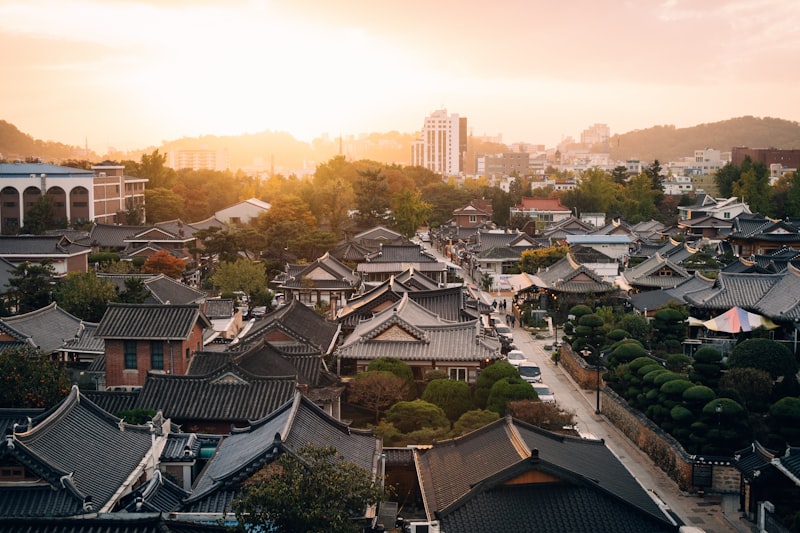
You changed jobs two years ago. The timing felt right — impulsive, even — but it worked. Before that, three years of stagnation where nothing you tried gained traction. And if you're honest, there's another shift coming. You can feel it.
A Saju practitioner could have told you exactly when those windows opened, how long they'd last, and what the next one looks like. Not because of psychic intuition. Because your chart already mapped it.
That's the difference between Saju and the astrology you grew up with. It does not tell you what type of person you are. It tells you when your life turns — and what to do about it.
Four Pillars, Eight Characters, 518,400 Combinations
Saju (사주) means "four pillars" in Korean. The full expression is 사주팔자 (saju palja) — four pillars, eight characters. Each pillar is built from the exact moment you were born: year, month, day, and hour.
Each pillar contains two characters — a Heavenly Stem (천간, cheongan) on top and an Earthly Branch (지지, jiji) on the bottom. Four pillars, two characters each: eight characters total. That's your chart.
Simple enough. But the depth is in what those characters represent.
There are 10 Heavenly Stems and 12 Earthly Branches. They cycle together in a fixed sequence of 60 unique pairings called the 육십갑자 (yuksip gapja) — the sexagenary cycle. This isn't arbitrary. The 60-pillar cycle is the backbone of the East Asian calendar, and it means each pillar position can hold one of 60 values, not 10 or 12.
When you multiply the possibilities across all four pillars — accounting for astronomical constraints on which combinations actually occur — you get 518,400+ unique chart configurations. Western astrology sorts the planet into 12 sun signs. Saju recognizes over half a million distinct birth charts before the practitioner even begins interpreting.
That number matters. It's the difference between reading a horoscope that applies to 650 million people and reading a chart that describes you.
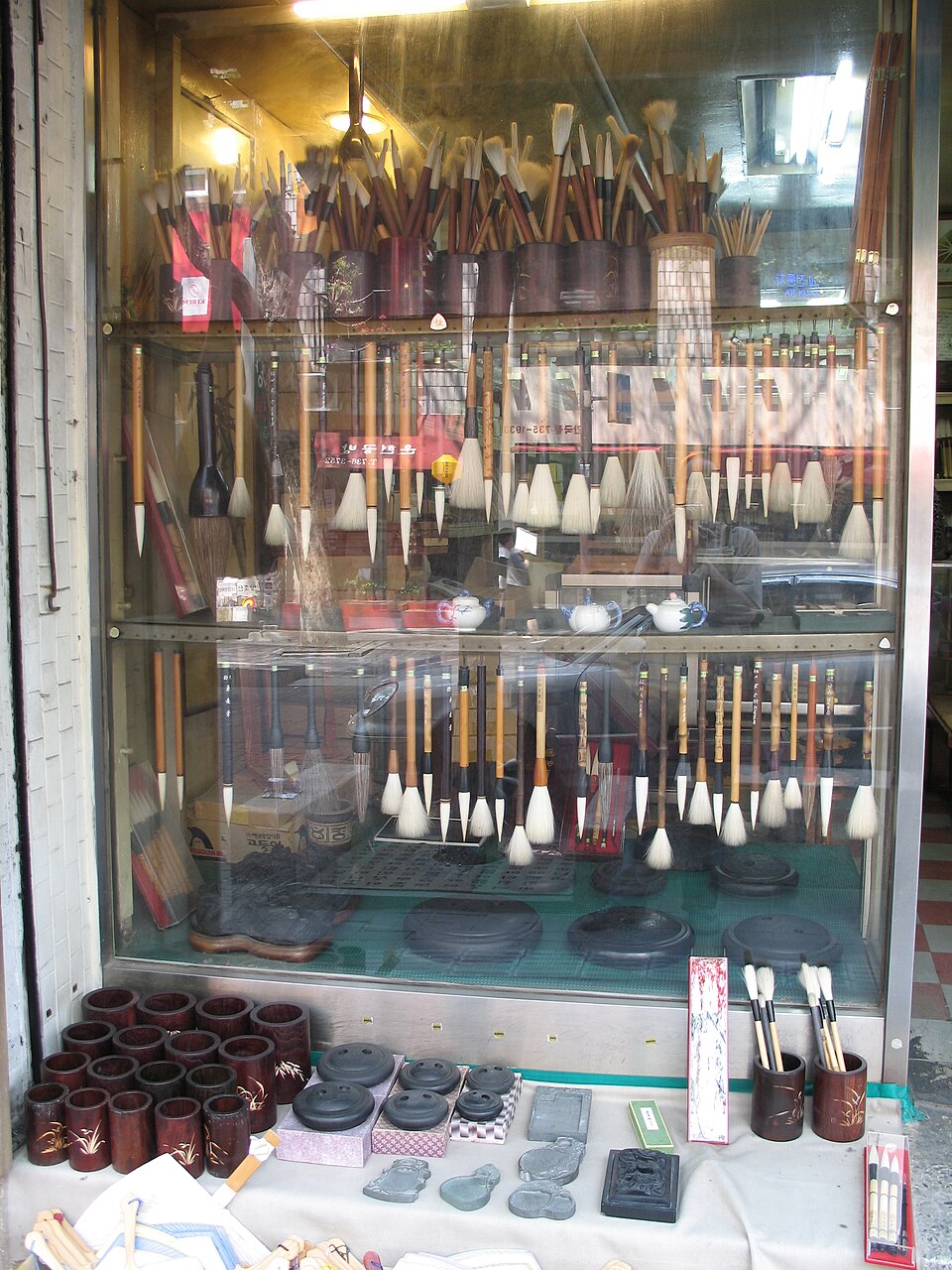
Saju charts are built from the same Hanja characters used in Korean calligraphy for centuries.
The Architecture of a Saju Chart
A Saju chart looks deceptively simple: four columns, two rows. But three layers of structure make it one of the most information-dense personality and timing systems ever devised.
Layer 1: The Visible Structure
The top row holds the four Heavenly Stems — the visible, expressed energy of each pillar. The bottom row holds the four Earthly Branches — the deeper, slower-moving forces that shape circumstances.
The four pillar positions each govern a different domain of life:
- Year Pillar (년주, nyeonju) — Ancestry, social identity, early childhood. How the world categorizes you before you speak.
- Month Pillar (월주, wolju) — Career, public reputation, parental influence. Often called the "career palace." The strongest seasonal energy in your chart.
- Day Pillar (일주, ilju) — Core self and intimate relationships. The Day Stem is your Day Master (일간, ilgan) — the single most important character in your chart. The Day Branch reveals your private nature and the kind of partner you attract.
- Hour Pillar (시주, siju) — Inner ambitions, children, legacy. How your life unfolds from midlife onward. The part of you that surfaces when nobody's watching.
Layer 2: Hidden Stems (지장간)
This is where Saju separates itself from surface-level systems.
Every Earthly Branch contains hidden stems (지장간, jijanggan) — one to three additional Heavenly Stems embedded inside. They represent latent energy: potential that exists in your chart but may not be immediately visible.
The branch 寅 (인, Tiger), for example, contains hidden stems of 戊 (Earth), 丙 (Fire), and 甲 (Wood). A practitioner reading a chart with 寅 in the Month Branch isn't just seeing "Tiger" — they're analyzing how those three hidden energies interact with the rest of the chart, which ones get activated by current cycles, and which stay dormant.
Hidden stems are why two people with the same Day Master can have fundamentally different lives. The surface chart may look similar; the hidden architecture tells a different story.
Layer 3: The Ten Gods (십성)
Here is where Saju becomes truly personal.
The Ten Gods (십성, sipseong) are a relationship system. Every element in your chart is defined by its relationship to your Day Master — not in isolation, but as a dynamic role.
An element that produces your Day Master is your Resource (인성, inseong) — support, knowledge, the people and systems that nurture you. An element that your Day Master produces is your Output (식상, siksang) — expression, creativity, the work you put into the world. An element that controls your Day Master is your Authority (관성, gwanseong) — pressure, structure, the forces that discipline you. An element your Day Master controls is your Wealth (재성, jaeseong). And the same element as your Day Master is your Companion (비겁, bigeop) — allies, rivals, competition.
Each of these splits into yin and yang variants, giving ten distinct "gods" — hence the name. A chart heavy in Output energy produces differently than one heavy in Authority. Someone with strong Wealth stars but weak Resource stars acquires easily but struggles to hold. Someone with dominant Companion energy thrives in competition but resists being managed.
The Ten Gods turn a chart from a static snapshot into a narrative. They explain "why" your career stalled, "why" that relationship dynamic keeps repeating, "why" you are brilliant in groups but paralyzed alone.
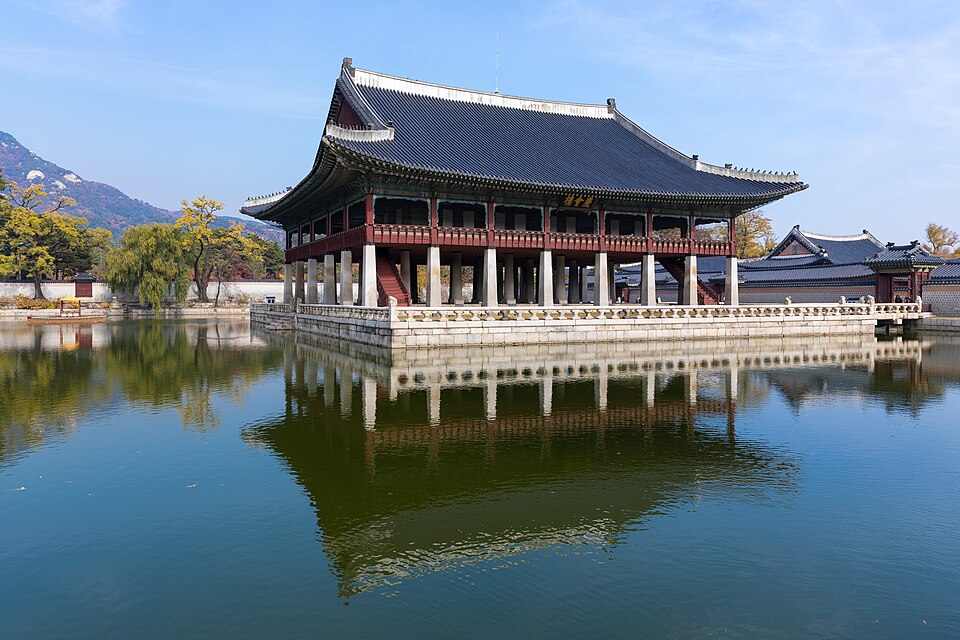
During the Joseon Dynasty, official Saju practitioners advised the royal court on everything from military campaigns to marriage alliances.
Chart Structure: The Operating System (격국)
Once a practitioner identifies your pillars, hidden stems, and Ten God distribution, the next question is: how does this chart operate?
That's 격국 (gyeokguk) — chart structure. Think of it as the operating system running beneath your personality.
격국 is determined primarily by the Month Pillar's relationship to the Day Master. A chart where the dominant Month energy is Output produces a 식신격 (sikshin gyeok, Eating God structure) — someone whose primary life pattern runs through creative expression, skill-building, and producing tangible work. A chart where Authority dominates creates a 정관격 (jeonggwan gyeok, Proper Authority structure) — someone whose life organizes around systems, institutions, and earned position.
There are roughly ten classical chart structures, each with distinct strengths, vulnerabilities, and life patterns. Identifying the correct 격국 is one of the most consequential decisions a practitioner makes, because it determines which element becomes the 용신 (yongsin) — the "useful god," the element your chart most needs for balance and forward motion.
Get the 용신 wrong and the entire reading drifts. Get it right and the chart unlocks: career advice becomes specific, relationship patterns become legible, timing windows become actionable.
This is why professional readings matter. Your Day Master is identifiable from a free calculator. Your 격국 and 용신 require a practitioner who understands how eight characters, their hidden stems, and their Ten God relationships interact as a system.
The Five Elements in Practice
The Five Elements — Wood (목/木), Fire (화/火), Earth (토/土), Metal (금/金), Water (수/水) — are the language Saju speaks. Every Heavenly Stem and Earthly Branch carries an elemental charge. Every Ten God relationship is defined by elemental interaction.
But elements in Saju don't work the way horoscope descriptions suggest. "You're a Fire person" is about as useful as "you're a Scorpio." The real question is always: which element, where, doing what?
Position Changes Meaning
Wood in your Month Pillar — the career palace — expresses as professional growth, industry ambition, strategic expansion. Wood in your Hour Pillar expresses as private creativity, parenting style, the projects you pursue for their own sake. Same element, completely different life domain.
Fire as your Day Master means expressiveness and visibility are central to your identity. Fire as your 용신 means you need more visibility, warmth, and social connection — it's medicine, not identity.
The Generating and Controlling Cycles
Elements interact in two fundamental patterns:
The generating cycle (상생, sangsaeng): Wood feeds Fire. Fire creates Earth (ash). Earth produces Metal (ore). Metal collects Water (condensation). Water nourishes Wood. Each element strengthens the next.
The controlling cycle (상극, sangguk): Wood breaks Earth (roots). Earth dams Water. Water extinguishes Fire. Fire melts Metal. Metal cuts Wood. Each element restrains another.
These aren't metaphors. They're the mechanics behind every Ten God relationship and every timing prediction in a chart. When a year's energy brings Metal into a chart dominated by Wood, the practitioner isn't guessing that pressure is coming — they're reading a structural collision.
Beyond Balance
Beginners often assume the goal is elemental balance — equal parts of everything. Practitioners know better. Some charts are designed to be imbalanced. A chart with overwhelming Water and almost no Fire isn't "broken" — it may be a 종격 (jongyeok, a follow-the-leader structure) that gains power precisely from its extreme concentration.
The practitioner's job isn't to fix your chart. It's to understand how your chart is designed to operate and advise you accordingly.
Not sure which element dominates your chart? Take the free element quiz for a starting point.
What Makes Saju Different from Western Astrology
The comparison is worth making precisely, not dismissively.
Resolution
Western astrology's sun sign system divides humanity into 12 categories. Adding moon and rising signs brings the practical resolution to a few hundred types. Saju's 518,400+ base combinations — before interpreting hidden stems, Ten God distributions, and 격국 — operate at an entirely different scale. Two people born six hours apart on the same day can have different Hour Pillars and fundamentally different charts.
Timing vs. Typing
Western astrology excels at psychological profiling. Saju excels at temporal mapping. The system's greatest strength is answering "when": when career momentum builds, when relationship patterns shift, when financial energy peaks or contracts.
This is possible because Saju maps your chart against moving cycles — annual energy (세운, seun), decade-long luck periods (대운, daeun), and monthly shifts. Your natal chart is fixed. The energy flowing through it changes constantly.
대운: The Decade Map
대운 (daeun) — major luck cycles — is the concept that has no Western equivalent. Starting from your birth, your life divides into successive periods of roughly ten years each, and each period is governed by a specific pillar with its own elemental energy.
A person entering a 대운 that strengthens their 용신 will feel the decade open up: career traction, relationship clarity, a sense of being in the right place at the right time. A person entering a 대운 that clashes with their chart structure will feel resistance — not as punishment, but as a signal to adjust strategy.
대운 is why a Saju reading can say "your early thirties will be significantly stronger than your late twenties" and be right. It's not prophecy. It's pattern recognition built on a millennium of observation.
Pillar Interactions (합충형파해)
Western astrology has aspects — trines, squares, oppositions. Saju has its own interaction system, and it's considerably more specific.
합 (hap, combinations): Certain branches attract and merge, transforming their elemental nature. 子 and 丑 combine to create Earth energy. When this happens in a chart, the practitioner reads it as a fundamental transformation — hidden potential activating, identities merging.
충 (chung, clashes): Opposing branches collide. 子 and 午 clash directly. In a natal chart, clashes signal internal tension. In timing (when a year's branch clashes with your chart), they signal disruption — not necessarily bad, but always consequential.
형 (hyeong, punishments): Certain branch combinations create friction that grinds. Three-way punishments involving 寅, 巳, and 申 are among the most analyzed patterns in professional readings.
These interactions happen both within your natal chart and between your chart and current cycles. A year that forms a 합 with your Day Branch affects your intimate relationships. A year that 충 your Month Branch disrupts your career. The specificity is what makes Saju actionable rather than abstract.
How a Practitioner Actually Reads a Chart
A professional Saju reading is not "look up your element, describe your personality." It's a structured analytical process:
Step 1: Chart Calculation. Convert the birth date and time into four pillars using the solar calendar and 절기 (jeolgi, seasonal nodes). Identify all eight visible characters.
Step 2: Map the Hidden Stems. Extract the 지장간 from each Earthly Branch. This expands eight visible characters into potentially twenty or more data points.
Step 3: Determine 격국. Analyze the Month Pillar's relationship to the Day Master. Identify the chart's operating structure. This single determination shapes the entire reading.
Step 4: Identify 용신. Based on the 격국, elemental distribution, and seasonal strength, determine which element the chart needs most. The 용신 becomes the compass for all practical advice.
Step 5: Read the Ten Gods. Map every element's relationship to the Day Master. Identify which Ten Gods are strong, which are absent, which are hidden in the 지장간 waiting to be activated.
Step 6: Analyze Pillar Interactions. Check for 합, 충, 형 within the natal chart and against current 대운 and 세운 cycles.
Step 7: Synthesize into Life Patterns. Career trajectory, relationship dynamics, financial timing, periods of acceleration and resistance — all derived from the structural analysis above.
This is why a thorough reading takes pages, not paragraphs. Each section of a professional report draws on different layers of the same chart. A career analysis pulls from the Month Pillar, 격국, Wealth and Authority stars. A relationship section focuses on the Day Branch, Companion and Output stars, and specific branch interactions. The chart is one. The readings are many.

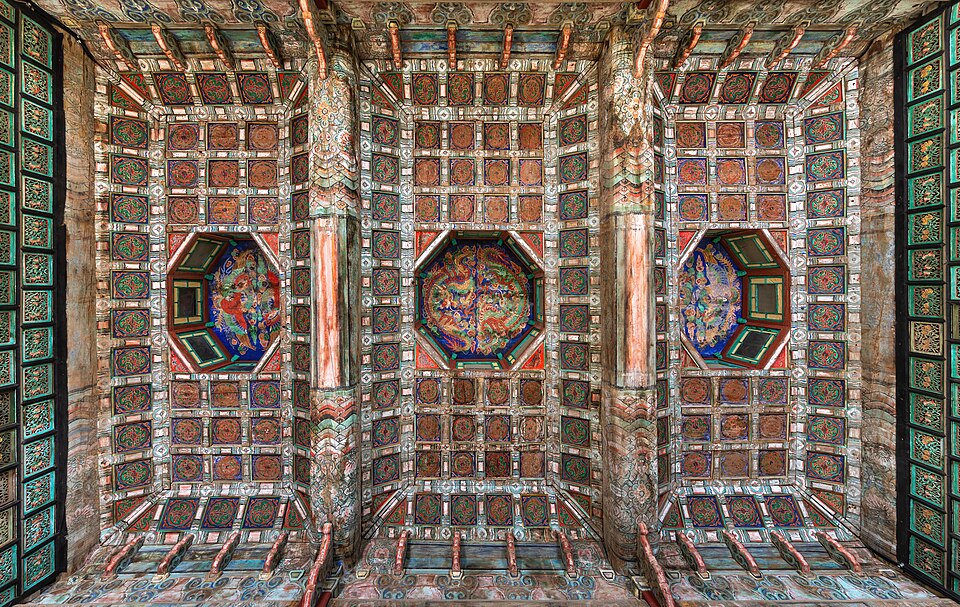
The precision of Korean traditional architecture mirrors the structural rigor of Saju chart analysis.
A Chart in Action
Abstract theory only goes so far. The following example shows what practitioner-level analysis looks like in practice.
Consider someone born September 15, 1995, at 2:30 PM. Their Day Pillar is 丙午 (byeonghwa-o, Yang Fire sitting on Horse). Already, this tells a practitioner several things:
- 丙 (Yang Fire) as Day Master: visibility, warmth, directness. This person is noticed when they enter a room.
- 午 (Horse) as Day Branch: Fire energy reinforced underneath. The Horse branch contains hidden stems 丁 (Yin Fire) and 己 (Yin Earth). Fire sitting on more Fire — intense but potentially self-consuming.
- 丙 sitting on 午 is at 제왕지 (jewangji) — the "peak" phase. Maximum strength. This Day Master doesn't lack confidence. The question is whether the chart provides enough counterbalance.
Now, suppose their Month Pillar shows strong Wood energy feeding that Fire, and their 격국 resolves to 식신격 (siksin gyeok, Eating God structure). This person's life pattern runs through production — creative output, skill mastery, building things the world can see and use. Their 용신 might be Earth or Metal: something to ground all that Fire, channel it into tangible results rather than letting it blaze outward without form.
In their 대운 map, if they enter a Metal-heavy decade in their early thirties, that's the period where structure arrives — career frameworks solidify, spending habits mature, relationships demand commitment rather than spark. It might feel restrictive after Fire-dominant twenties. But it's exactly what the chart needs.
One paragraph. One birth date. And already the reading has moved from "you're a Fire person" to specific predictions about career pattern, timing, and the emotional texture of an entire decade.
That's the difference between a system with 12 categories and one with 518,400.
What Saju Won't Tell You
Intellectual honesty builds more trust than overclaiming.
Saju will not predict specific events. It maps energy patterns and timing windows — "career momentum builds here," not "you'll get promoted on March 14th." It identifies relationship dynamics, not the name of your future partner.
It is not a medical system. Traditional Saju maps elemental tendencies to organ systems, but no responsible practitioner diagnoses or prescribes. Wellness tendencies, not health predictions.
It does not override free will. Your chart shows terrain — hills, rivers, open plains. Two people with identical charts (born the same year, month, day, and hour) will navigate that terrain differently based on choices, environment, and effort. The chart shows what energy is available. You decide what to build with it.
And it is not fortune-telling in the carnival sense. No lottery numbers. No "you will meet a tall stranger." The value is structural: understanding "why" certain periods of your life felt effortless and others felt like resistance, and knowing which pattern comes next.
You Might Wonder
Do I need my exact birth time?
Saju uses 2-hour windows called 시진 (sijin). You don't need the minute — "around 3 PM" or "early morning before dawn" is usually enough. Check your birth certificate or ask a parent.
If your birth time is genuinely unknown, a reading can be constructed from three pillars. It's still remarkably detailed. But the Hour Pillar adds a full quarter of the chart's information — inner life, creative drive, later years — so it's worth the effort to find out. More on why in our birth time guide.
I'm not Korean. Does Saju apply to me?
Saju is built on the solar calendar and Five Element theory — universal frameworks tied to astronomical cycles, not cultural identity. Your chart is calculated from when and where you were born, not where your family is from.
Saju Atelier's readers span dozens of countries. The Five Elements don't check passports.
How is Saju different from Chinese BaZi?
They share roots in the Tang Dynasty Four Pillars tradition, but Korean Saju diverged significantly over centuries of independent development. Different 절기 calculation methods, distinct 신살 (sinsal, spiritual markers) unique to the Korean tradition, and interpretive frameworks that emphasize different pillar relationships.
The difference is real, not cosmetic — comparable to the divergence between British and American common law. Same origin, meaningfully different systems.
Can I learn to read my own chart?
You can learn to identify your Day Master, spot your dominant elements, and understand your basic Ten God distribution. We encourage it. An informed client gets more from a professional reading, not less.
But professional-level interpretation — 격국 determination, 용신 identification, 대운 mapping, interaction analysis — requires training in hundreds of pattern combinations and the judgment to weigh competing signals. The rules take months to learn. Applying them well takes years.
How often should I get a reading?
A comprehensive natal reading is a one-time foundation. Your four pillars don't change. What changes is the energy flowing through them — and that shifts annually.
Most clients return for an annual update that maps the current year's energy against their natal chart. Major life transitions — career moves, relationship decisions, relocations — are particularly good moments to consult your chart's timing map.
Your chart was set the moment you were born. The question is whether you read it.